

It’s the 20th century, and having a presence online is so important in today’s increasingly competitive world, let alone for small businesses in Australia.
In this blog, we’ll be looking at Landing Pages. As someone who has written many website copies, I can say that your landing page is one of the most important pages you can create.
As a business owner, it’s totally understandable to focus on the day-to-day business processes and overlook the content on your landing page. However, your landing page is the first impression your business makes on your audience. Think of it as the resume you submit when applying for a job. Is it great? Or could it be better?
If you already have a landing page live but aren’t seeing the conversions and leads you hoped for, this article is likely for you. Here are 6 landing page mistakes that you may not know you’re making, and how you can fix these common landing page mistakes.
Hint: fixing them is easy.
TL;DR (Summary): A landing page is one of the best ways to sell to customers, acting like your salesperson when you sleep. Avoid these landing page copy mistakes: writing without audience understanding, weak headlines, focusing on product features instead of benefits, unclear call-to-action, and no SEO.
Six Landing Page Copy Mistakes That Are Making Your Clients Go Elsewhere
- Writing without understanding your audience
- Weak or confusing headlines
- Focusing on product/service features instead of benefits
- No clear or strong Call-to-Action
- Overloading your content with jargon
- Overlooking SEO
If you’re not sure what’s the difference between a landing page and a website page, I recommend reading this blog first: Landing Page Copy vs Website Copy: What’s the Difference
1. Writing Without Understanding Your Audience
Before you begin writing that landing page, let’s take a moment to understand your audience. Different audiences have unique needs and pain points, and understanding your audience would help you personalise your landing page content.
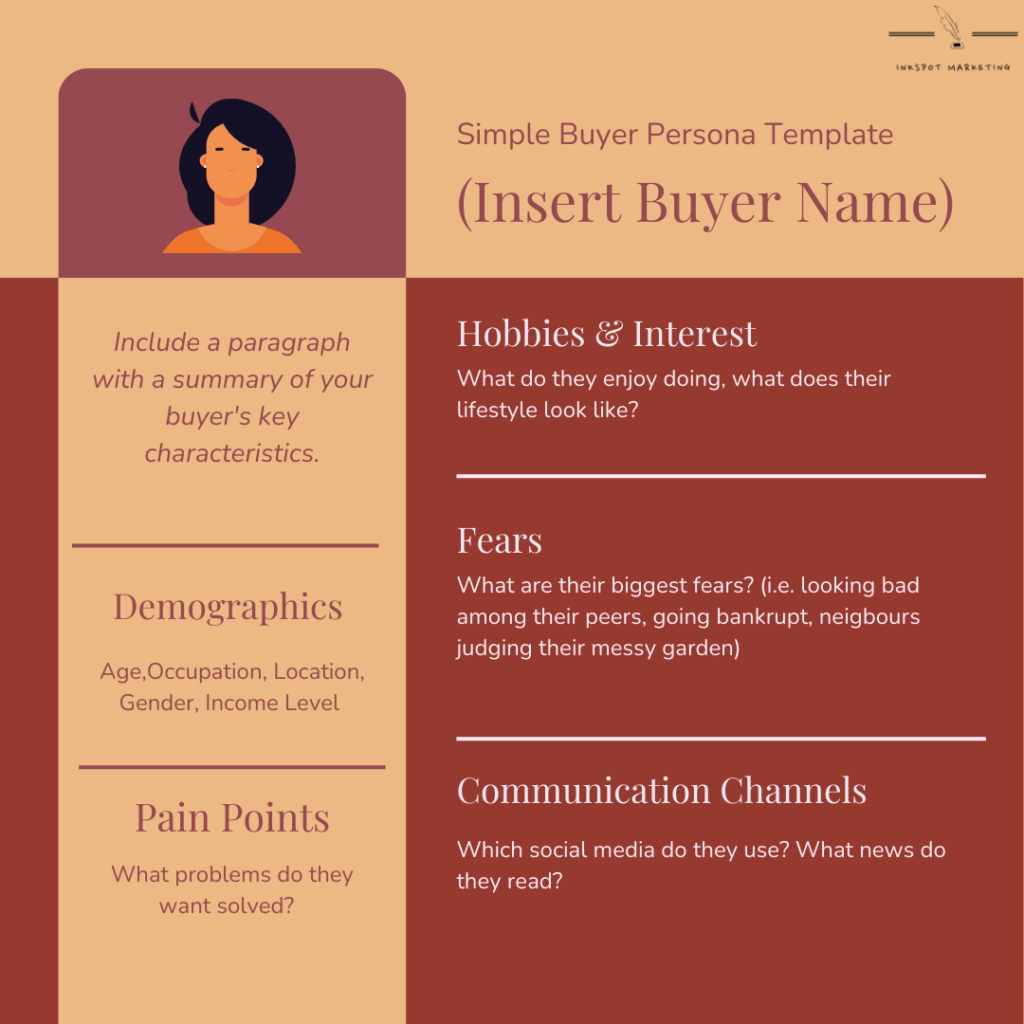
One way to start understanding your audience is to create personas. Here’s an overly simplified 3-step process to do it:
- Conduct surveys, interviews, or simply have a chat with an existing customer
- Identify patterns and similarities between your customers.
- Map them in an organised way to view them easily. Use the template below as a guide in crafting your persona.
2. Weak or Confusing Headlines
Fancy animations, vibrant colours, and readable fonts are nice, but would count for nothing if your headline is weak and confusing. The headline is the first thing your customers see when they land on your landing page. Does it make them stay?
For a stronger headline, avoid the generic and focus on the specifics. Your audience needs to understand why your offer matters, or they’ll become uninspired, uninterested and leave your website.
Here is an example I did recently for a chiropractor. The original sentence was ‘we focused, and it isn’t relatable to the customer. I changed it to be solution-focused and emotional. Remember, emotions sell.
| ❌ Bad | ✅ Good |
| Expert Chiros in (insert suburb here) | Let’s Get Rid of Your Sciatica Pain |
3. Focusing on Features Instead of Benefits
This links up with point number 2. What is the difference between a feature and a benefit? A feature talks about a product, while a benefit is a positive outcome your audience gets from using your product.
Source: LinkedIn
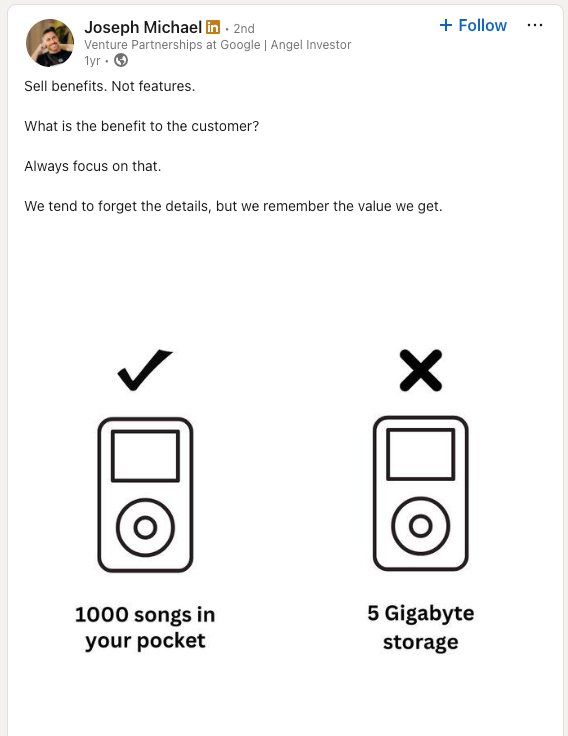
Let’s look at the image above and pretend it’s 2009. It may not be that impressive today, but in 2009, any device with 5 gigabytes of storage was jaw-dropping. But the copy is still unclear on why your audience should care.
Having 1000 songs in your pocket, however, clearly shows how the audience would benefit from purchasing an iPod.
Focusing on features is one of the most common copywriting mistake small businesses make. If you’re unsure about the benefit of your product, ask yourself honestly:
“If you were an audience, why would you buy your product?”
4. No Clear and Strong Call-to-Action (CTA)
After seeing how good your product and service are on your landing page, your audience is convinced and ready to buy. This is where your buttons come in, and every button needs a Call-to-Action (CTA).
As the word itself goes, a Call-to-Action prompts your audience to take action, which ultimately generates the leads and conversions you are looking for. Again, avoid being generic and let’s be specific.
A specific and actionable CTA coupled with contrasting colours and strategic placement on your landing page can easily catch your audience’s eye – making them more likely to click.
| ❌ Generic and Vague | ✅ Specific and Actionable |
| Book Now | Book Your Free Slot Today |
5. Overloading Your Content with Jargon
Nobody likes jargon, and any time that takes an audience to process jargon is time they could be learning more about your product.
Likewise, too many technical words can mean information overload for your audience, who are trying to understand your content. This makes it an unpleasant reading experience on your website and can increase your bounce rates.
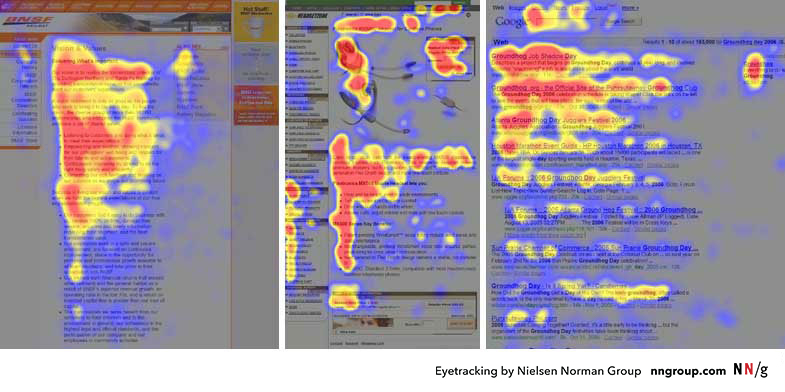
Nielsen Norman Group discovered that readers tend to read in an F-pattern, so it’s best to include important keywords at the front of your sentence, while also keeping it short and scannable for better readability.
Source: Nielsen Norman Group
6. Ignoring SEO
There is no use in putting hours into the landing page content if no one is going to read it, particularly if you’re not running ads to it. That is why prioritising Search Engine Optimisation (SEO) is crucial.
Today, with the introduction of AI, companies are starting to practice Answer Engine Optimisation (AEO) and Generative Engine Optimisation (GEO). These practices are almost identical to SEO, meaning that any SEO activities you do now could get you seen by AI answers.
The ultimate goal is to ensure you include relevant keywords in your landing page content and structure them neatly for Google to read, recognise and rank it on their search engine.
A simple tip could be to include your location as part of the keywords you intend to rank for. For example, if you are a cafe in Perth, including “cafe in Perth” 2-3 times naturally on your landing page would easily rank you in search results.
Key Takeaway
There is no such thing as one-size-fits-all content when it comes to writing website copy. Your landing page and website serve two different purposes. Hence, your marketing strategies and copy must follow suit if you’re going to funnel your audience seamlessly through your marketing process.
If you’re looking disappointedly at your website or landing page, it’s never too late to start over. Reach out to Inkspot Marketing to learn more about our website copywriting services. No obligations.
Frequently Asked Questions
What makes good landing page copy for small businesses?
First, you will need to understand your audience as thoroughly as possible before deciding to write anything. Next, tailor your message to them and not about your business. Focus on what your audience gains from using your business, not what your business can do for them.
What are the most common landing page copy mistakes to avoid?
- Writing without understanding your audience’s needs and pain points.
- Long and unengaging headlines that dilute your value proposition.
- Long and non-actionable call to action copy.
- Bad SEO practices – no keyword research, failing to include quality keywords in your landing page, and thin copies throughout the landing page.
- Bad website navigation and slow loading speed.
Why is my landing page not converting visitors into leads?
It’s probably lacking a conversion pitch and an understanding of your audience. Before you start writing or editing, consider why your potential audiences should choose your product and service instead of your competitors. That will give you a clear, unique selling point that sets you apart from your competition.
Should I hire a professional copywriter for my website?
Yes. If you’re struggling to write a copy or have written copy that doesn’t seem to deliver the results you like. A copywriter can identify and suggest copy improvements and fixes you can make on your website, which are often overlooked by business owners.
How can SEO copywriting improve my landing page performance?
Search Engine Optimisation (SEO) copywriting is a strategy that can help you reach your audience through search engines. So you don’t have to run ads to get visibility on your landing page. It includes researching for the right keywords that align with your business and placing them in the right areas of your landing page.

Denise Choong
Author
Denise is a small business marketer and copywriter in Perth, and the founder of Inkspot Marketing. With over 10 years of marketing experience, she’s worked with businesses in SaaS, finance, NDIS, medical, hospitality, and other industries.
Denise is passionate about using sound marketing practices to help business owners see tangible results in their investment. More than quick short-term wins, she works closely with businesses and marketing teams to see long-term, lasting growth.