


If you’re posting on Instagram, writing the odd blog and maybe even sending a newsletter here and there, but not getting leads. You have a content problem.
I’ve seen this happen too often as a branding consultant. The issue isn’t how much content you’re creating. It’s the type of content you’re creating. Not all content is built for lead generation, and knowing the difference will save you a lot of time.
This guide covers my top content types for lead generation: what they are, what they’re good for, and how to choose the right one for your business.
What is Lead Generation Content?
Lead generation content is content created by organisations to obtain a potential customer’s contact information (e.g., phone number or email). For example, companies could write a free eBook, advertise it online, and require customers to provide their contact details to receive it.
This contact detail is then used to build relationships with potential customers, which can be done through email marketing. We call this step: Nurture.
Good lead gen content must be genuinely useful. It should:
- Solves a real, specific problem your audience has
- Move leads up the marketing funnel
- Offers immediate value that’s attractive
- Requires an email or contact info in exchange
- Positions you as someone worth trusting
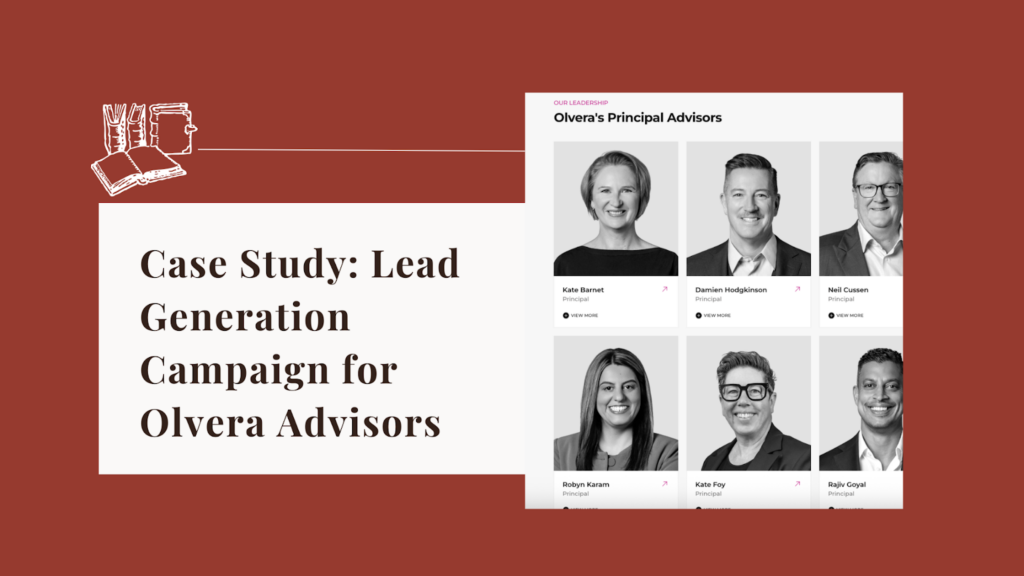
Lead generation content is one of the best ways to get potential customers, especially if you’re a B2B company or relying on returning customers. To see a lead generation strategy in action, here’s a case study that might interest you: Lead Generation Campaign for Olvera Advisors.
Top Content Types for Lead Generation
Videos
Video is one of the most powerful tools for generating leads, especially with the short attention span of audiences these days. When done well, it captures attention fast, builds a personal connection, and works across YouTube, social media, and landing pages.
What I love about video is that it lets people feel like they already know you before they’ve even reached out. That kind of trust is hard to build with text alone. Examples of videos are: how-to tutorials, video sales letters, and presentations.
But you do need to be comfortable on camera, and make sure that your quality is clear. You should also caption your videos, since most people these days are silent scrollers.
If that’s not where you’re at right now, there are other formats that work just as well.
Best for: Businesses targeting visual learners or younger audiences.
eBooks and Downloadable Guides
eBooks are among the most promising forms of lead-generation content and remain highly effective, especially for consultants, agencies, and B2B businesses.
So how do we get started with ebooks and guides? You write genuinely useful content on something your audience cares about, advertise it or add it to your website, and people download it in exchange for their contact details.
These ebooks are relatively low-cost to create and have a good chance if your business is somewhat technical.
I’d encourage you to get specific. A “Step-by-Step Guide to Navigating Your Business Activity Statement” is something people actually download. “10 Accounting Tips for Small Business” is not. Refrain from overusing AI in your eBooks and ensure they contain content customers genuinely want to read.
Best for: Technical companies, consultants, and B2B businesses.
Interactive Tools: Calculators and Assessments
Interactive tools involve a lead adding their data to your website, and you provide them with a specific output about their situation. These tools, like ROI calculators, budget estimators, and self-assessments, are among the highest-converting content types for lead generation because people are actively engaged throughout.
Research consistently shows that interactive content generates twice as much engagement as static content.
I think this lead gen is often underused by small businesses, which means there’s a real opportunity here. You can also build it much more easily now with AI tools like Claude Code.
Best for: Businesses that want to provide personalised recommendations or results.
Checklists and Templates
Checklists and templates are quick to create, easy to use, and incredibly effective because they eliminate work for the person downloading them. This could be a social media content calendar, an SEO audit checklist, or an onboarding process for new clients.
If I had to recommend one content type for every small business starting out with lead generation, it would be a checklist or template. Checklists are things people genuinely use, and you’re not just offering information; you’re handing someone a shortcut.
However, if your goal is to explain a technical process, then I wouldn’t recommend this.
Best for: Any business whose audience follows a process or needs a ready-made framework.
Industry Reports
An industry report has your own research, data, or analysis on a trend in your field. These are great because they position you as a genuine thought leader, and are also the kind of content that gets shared, referenced, and linked to. People see it as high-value because it offers something they can’t just Google.
The challenge is that it needs to be real research. You can’t just pull stats from someone else’s blog and repackage them. Reports that work well come from companies that have access to their own client data, survey results, or genuine industry insight.
This lead gen content type takes more effort, but the payoff is significant.
Best for: Established businesses in fast-moving industries like tech, finance, and healthcare.
Webinars
Webinars are live online seminars that your potential customers register for. It is one of the best ways to build relationships, because people who don’t just know who you are, but have spent an hour with you.
Webinars give you the chance to educate, answer questions, and build real trust before anyone’s spent a dollar with you. The good part of webinars is that they can also be repurposed into blog posts, short videos, or podcast episodes afterwards (which is excellent for SEO).
However, the thing about webinars is that the topic has to genuinely matter to your audience. Of all the lead-generation content types, it’s also the most expensive and resource-intensive. Once you start webinars, you’ll need to continue doing them to maintain your brand image.
Best for: Consultants, coaches, agencies, and educators.
How do I Choose the Right Lead Generation Content for My Small Business?
Start with what you can actually commit to creating well, and also look at what your audience actually wants to know. Then create a lead generation based on your audience’s interests that you can afford to design, promote, and maintain.
Here’s an important note. The best lead generation that can give you a better ROI is always one that moves your customers further down the marketing funnel
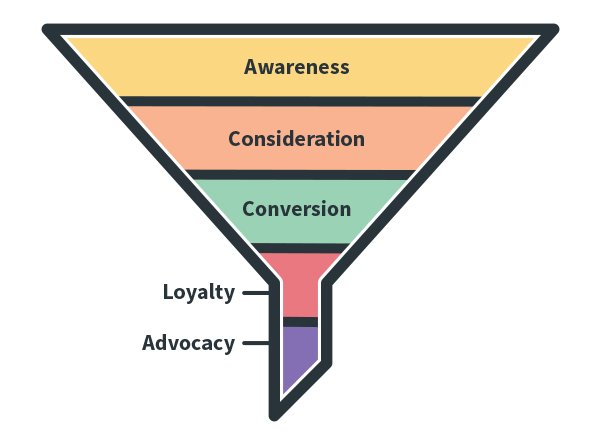
Let’s give an example of an accountant who wants to target business clients with lead generation content. If your customers are unaware of your business, an ‘End of Financial Year Prep Guide’ eBook would be a good piece of content to move them from awareness to consideration.
However, if you want them to take action, an interactive financial health calculator would be good lead-gen content to create.
How to Promote Your Lead Generation Content
This is where most small businesses drop the ball. They spend weeks on a great lead magnet, post it once on Instagram, and wonder why no one downloaded it.
Your lead gen content needs a home, ideally a dedicated landing page, and a real promotion strategy. Share it on social media regularly, not just once. Include it in your email signature. Run a paid ad, and partner with others in your space to cross-promote.
Track what’s working: How many downloads or sign-ups? What’s your conversion rate? Which content types perform best? Then do more of what works.
Common Mistakes with Lead Generation Content
- Creating something generic. Don’t create lead gen content that they can Google or ask AI easily.
- Creating content you like, not content they need. It doesn’t matter if you’re proud of your industry report if your audience would rather have a checklist.
- No follow-up. Someone downloads your eBook. Then what? If you don’t have a nurture sequence ready, you’re leaving money on the table. Always have a plan.
- Not sending the content to their email (for downloads and eBooks). Always send the content to their email instead of allowing them to download it directly. This will help you reduce spam.
- Not asking qualifying questions. Before the download/registration, consider asking qualifying questions to ensure that you’re targeting the right group.
Best Lead Gen Content Types for Small Business: A Quick Summary and Comparison
Here’s a quick table comparing the different content types and their suitability for each industry. Use this table as a quick reference when deciding you next lead generation content.
Content Marketing Matrix
Select your industry, then swipe to explore each content type →
Key Takeaway
The best content type should move your customer up the marketing funnel. You can only do this if it’s valuable to the customer and matches what they are looking for at that moment. But once you have done your audience research and know what they are after, you’ll be able to get the best ROI from your lead generation content.
You don’t need to be everywhere in lead generation, but you do need to be useful somewhere.
If you’re stuck in your content and need that extra help, I work with Aussie businesses to refine their content strategy. We’ll look at your existing lead generation content and see how we can make it better. See my pricing here.
Frequently Asked Questions
What are the best content types for lead generation?
The best content types for lead generation are eBooks, checklists and templates, webinars, videos, interactive tools, and industry reports. What works best depends on your audience and what you’re genuinely comfortable creating. I’d recommend starting with checklists or templates if you’re a small business. They’re quick to make, useful straight away, and have high perceived value.
What type of lead generation content generates the most leads?
Webinars and interactive tools like calculators tend to generate the highest-quality leads because they require real engagement from the person. But the right answer depends on your audience and industry, as you don’t want to have all leads, but they are unusable. For example, a B2B consultant might convert more with an in-depth eBook, while a service-based business might do better with a short video series. Test one or two formats and let the results guide you.
Are eBooks still effective for lead generation content?
Yes, but only if they’re genuinely useful. Generic eBooks with thin, obvious content won’t convert. The best ones are specific, actionable, and written by someone who actually knows their stuff. If you can answer a real question your audience has in a way they can use straight away, an eBook is still one of the most reliable lead generation formats around. Be as specific as possible. For example, an accountant should look at creating an eBook that says ‘How to structure your trust effectively’ instead of ‘Top tax tips for business owners’.
Do I need video content for lead generation?
Not necessarily. Video works brilliantly for building connection and engagement, but it’s not the only path. If you’re not comfortable on camera, focus on formats that play to your strengths. Written guides, checklists, or templates are just as effective when done well. Lead gen content works when it provides real value. The format is secondary to the usefulness of what you’re offering.
How do I create lead-generation content with a good ROI?
Start with low-cost formats like checklists, templates, or eBooks. You can design them in Canva or Claude for free, finesse them with your expertise, and host them on your existing website. Focus on one high-quality piece rather than several rushed ones, and always create qualifying questions, so that you invest resources in nurturing the right people.
How do I promote my lead generation content?
Add it to a dedicated landing page on your website. Share it on social media regularly, not just once. Include it in your email signature and any active campaigns. You should also consider a small paid ad on Facebook or Google if you have the budget. And track your results: download numbers, sign-up rate, and which content type performs best.

Denise Choong
Author
Denise is a small business marketer and copywriter in Perth, and the founder of Inkspot Marketing. With over 10 years of marketing experience, she’s worked with businesses in SaaS, finance, NDIS, medical, hospitality, and other industries.
Denise is passionate about using sound marketing practices to help business owners see tangible results in their investment. More than quick short-term wins, she works closely with businesses and marketing teams to see long-term, lasting growth.